VocoPro Karaoke Machine: DA-4000 Pro, UHF-5800 and Professional Component System Explained
Most karaoke machines are built for living rooms. VocoPro is built for everything else. VocoPro is a professional-grade karaoke equipment brand that builds dedicated amplifiers and mixers for permanent venue and bar installation — the DA-4000 Pro is the brand’s flagship 200W professional karaoke amplifier.
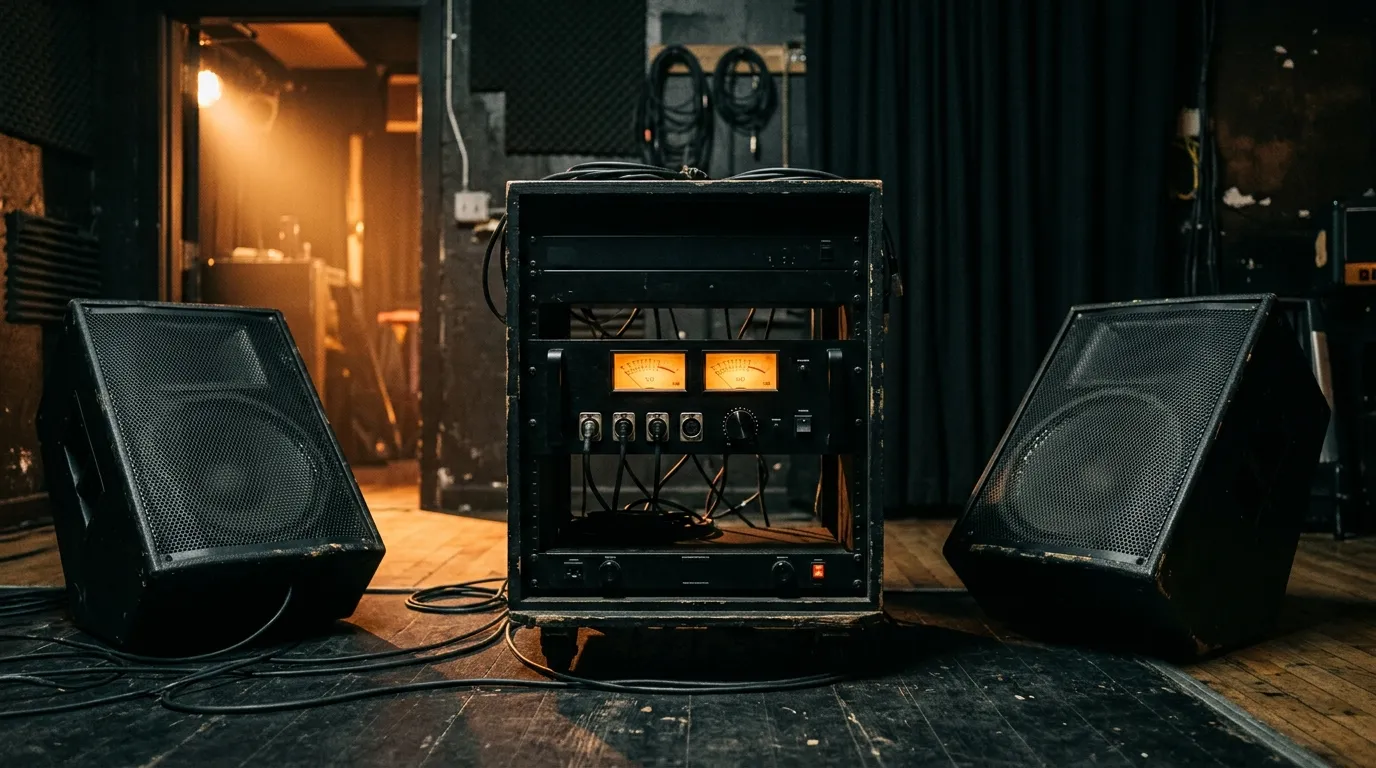
The critical thing to understand before going further: VocoPro products are component systems, not all-in-one machines. The DA-4000 Pro is an amplifier — it needs separate PA speakers, a separate track source, and professional cabling to form a complete system. That’s a fundamentally different buying decision from a consumer all-in-one unit.
Table of Contents
The brand’s companion product, the UHF-5800, is a 4-channel wireless microphone system designed to pair with the DA-4000 Pro for group karaoke and KTV-style use with up to 4 simultaneous wireless mics. This page covers the DA-4000 Pro in full specification, explains how to build a complete VocoPro system, covers the UHF-5800 and the wider lineup, and gives an honest comparison against consumer alternatives. For a broader look at the professional karaoke machine category, the best professional karaoke machine review covers the full picture.
What Makes VocoPro Different: Professional Component Systems, Not All-In-One Machines
VocoPro differentiates from every consumer karaoke machine brand by manufacturing component amplifiers and mixers rather than self-contained all-in-one units — the DA-4000 Pro is an amplifier that requires separate PA speakers, a separate track source, and professional cabling to form a complete karaoke system.
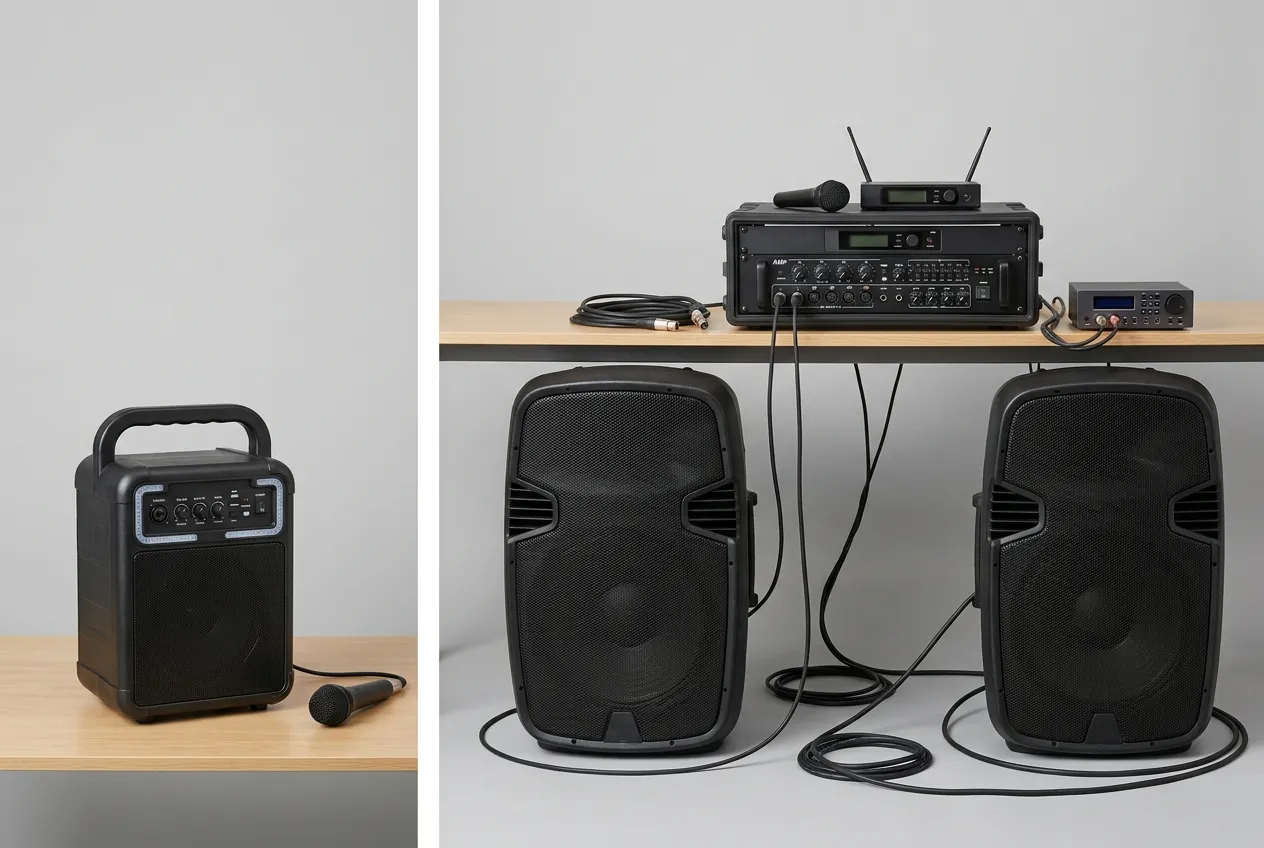
That distinction matters practically. A consumer machine like the JYX PA9Plus or iKarao Shell S1 is a single purchase — plug it in, connect a phone, start performing. A VocoPro system is 3 separate purchases: the amplifier, 2 active PA speakers, and a track source. More complexity, more cost, and more setup time.
So why do venue professionals choose component over all-in-one? Three reasons. First, each component upgrades independently — when the speakers need replacing, the amplifier stays; when a better amp becomes available, the speakers carry over. Second, the total power ceiling is higher — a DA-4000 Pro paired with 2 professional 15-inch active speakers delivers sustained output at 110dB+ that no consumer all-in-one reaches. Third, XLR balanced connections reduce noise over the long cable runs typical in permanent bar installations — a 10-metre cable run on a professional XLR connection is quiet; the same run on a consumer TRS connection introduces hum.
The total system cost is the honest trade-off. The DA-4000 Pro at $200–$280, plus 2 active PA speakers at $150–$300 each, brings the minimum complete system to $500–$880 — compared to $120–$400 for consumer all-in-one alternatives. That premium is justified for sustained commercial or semi-professional use; it’s not justified for occasional home karaoke.
One final advantage worth naming: a component system built around the DA-4000 Pro can scale. Add a second pair of speakers to cover a larger room. Upgrade the amp to a higher-output model without touching the speakers. Add a mixing desk between the track source and the amplifier for more sophisticated audio control. Consumer all-in-one machines are fixed at their original specification — the VocoPro component platform is not. For buyers whose use case is genuinely commercial, the best professional karaoke machine review ranks VocoPro alongside every competing professional option.
VocoPro DA-4000 Pro — Full Specification
The VocoPro DA-4000 Pro is the brand’s flagship — it delivers 200W pre-amp output, 4 XLR/6.35mm combo microphone inputs, digital key control adjustable over ±6 semitones, built-in echo and reverb processing, and a vocal enhancer, at $200–$280.
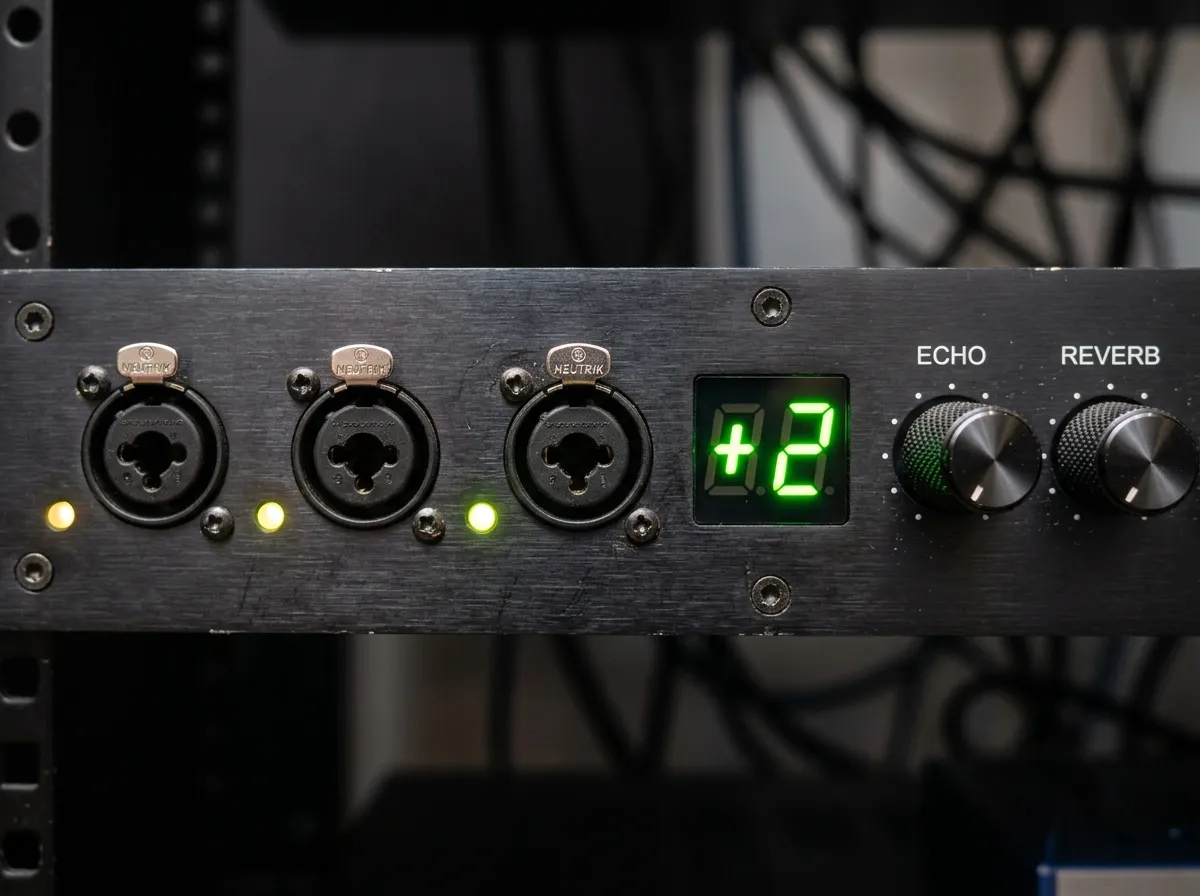
The 200W figure is the pre-amp output rating of the amplifier itself. Final system volume depends on the connected PA speakers, which are purchased separately. A typical pairing with 2 active 15-inch speakers (each rated 200–300W) produces combined system output suitable for venues of 50–150 guests at continuous performance levels — approximately 110–115dB SPL at source.
The 4 combo input jacks are a defining professional specification. Each jack accepts either an XLR balanced connector or a 6.35mm TRS connector in the same socket — no adapters required. XLR balanced inputs carry the microphone signal on two conductors with opposite polarity, cancelling interference across long cable runs. In a permanent bar installation where mic cables cross power cables and lighting rigs, this matters. Budget consumer machines use TRS-only inputs that are more susceptible to hum in electrically noisy environments.
Digital key control is adjustable from −6 to +6 semitones in 1-semitone steps via a front-panel button. It shifts the pitch of the backing track up or down without changing the tempo of the track— a critical distinction covered in detail in H2.4 below. The vocal enhancer applies light high-frequency shaping to the mic signal, adding brightness and presence without full equalisation.
The DA-4000 Pro is a standard 19-inch rack-mount unit (1U or 2U height) designed for permanent rack installation in a bar’s equipment cabinet, DJ booth, or dedicated equipment room. It has no display, no built-in speakers, no track library, and no Bluetooth. It is a professional signal processing and mixing device — that is its entire function, and it does it at a level no consumer all-in-one machine replicates.
The rear panel carries standard RCA line inputs for connecting the track source (phone, tablet, CDG player, laptop) and RCA line outputs for sending the mixed signal to active PA speakers. There’s no Bluetooth, no screen, no built-in track library, and no USB port for track storage. The DA-4000 Pro is a signal routing and processing device — every input and output is handled via dedicated physical connectors, consistent with professional installation standards.
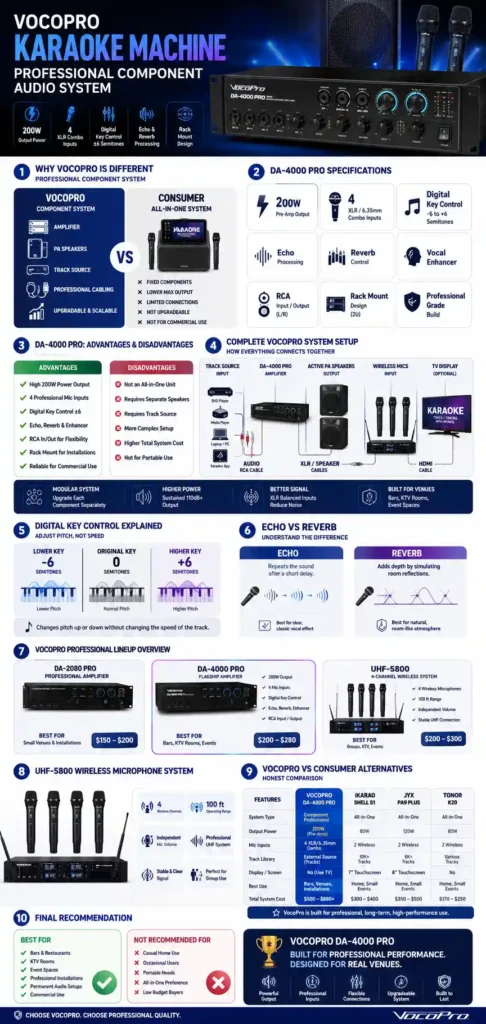
VocoPro DA-4000 Pro: Advantages and Disadvantages
| ✅ Advantages | ❌ Disadvantages |
|---|---|
| 4× XLR/combo inputs — accepts both balanced XLR and 6.35mm TRS mics in the same jack | Requires 2 separate active PA speakers — not included, adds $300–$600 to system cost |
| Digital key control ±6 semitones — transposes backing track pitch without changing tempo | Minimum total system cost is $500–$880 — 3–6× the price of consumer all-in-one alternatives |
| 200W pre-amp output — pairs with professional PA speakers for sustained high-volume performance | No built-in track library, no Bluetooth, no screen — requires a separate track source device |
| Independent echo and reverb controls (analog processing) — consistent and low-noise at professional output | Rack-mount form factor — not portable, designed for permanent installation only |
| Each component upgrades independently — replace speakers or amp without replacing the full system | High setup complexity — requires cabling, rack space, and professional installation know-how |
| XLR balanced connections reduce hum and noise over long cable runs in permanent venue installations | Not suited to casual or home karaoke use — overkill for occasional small-group sessions |
| 19-inch standard rack-mount form factor — fits all standard equipment cabinets and DJ booths | No HDMI output — TV/display connectivity requires separate video source configuration |
Full DA-4000 Pro specification summary: 200W pre-amp output | 4× XLR/6.35mm combo inputs | Digital key control ±6 semitones (1-semitone steps) | Echo depth control | Reverb depth control | Vocal enhancer | RCA line inputs + outputs | 19-inch rack-mount | Requires separate PA speakers | Price: $200–$280.
Building a Complete VocoPro Karaoke Machine System: Amplifier, Speakers, and track Source
A complete VocoPro karaoke system requires 3 components purchased separately: (1) the DA-4000 Pro amplifier at $200–$280, (2) 2 active PA speakers at $150–$300 each, and (3) a track source — typically a tablet running KaraFun Pro or a dedicated karaoke player at $50–$300.
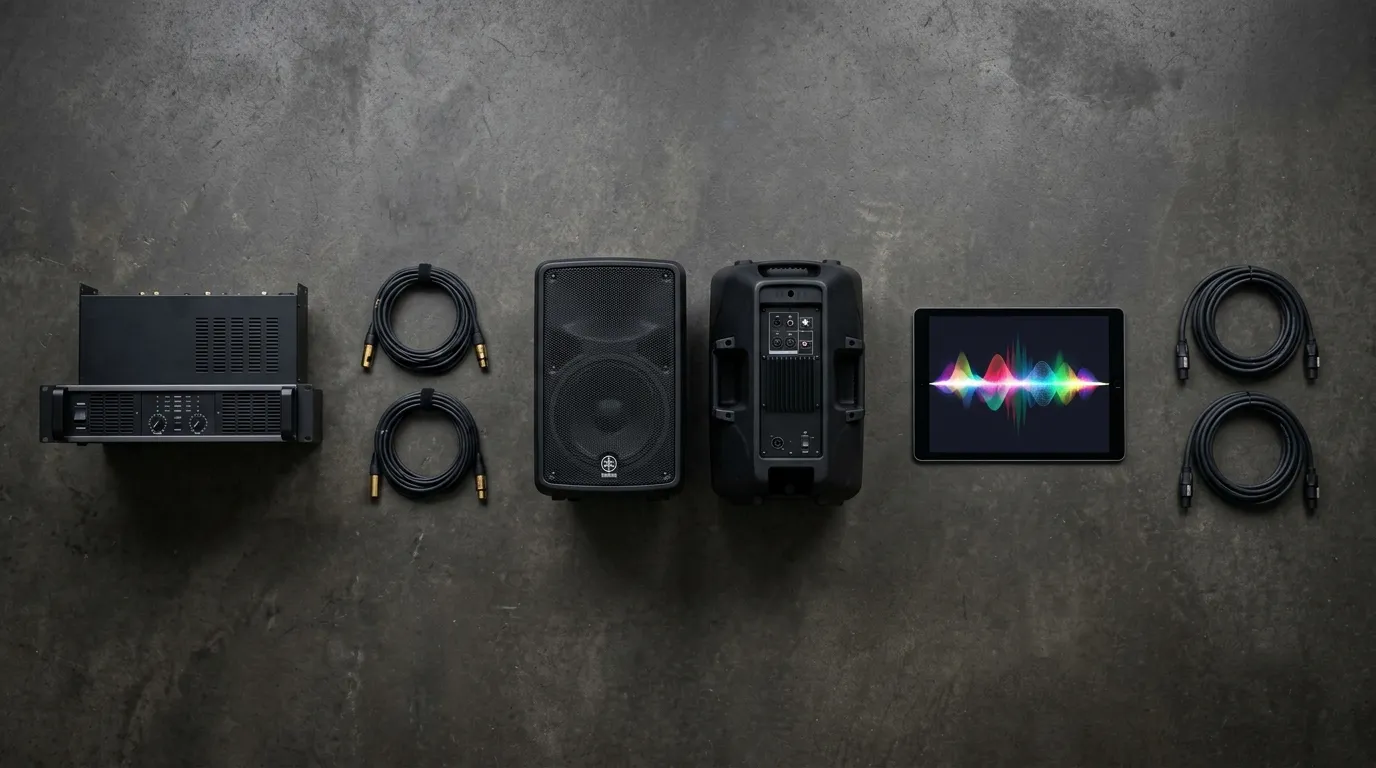
Here’s what each component does and how to choose it:
The amplifier (DA-4000 Pro): Routes the mic signal and backing track through key control and voice effects, mixes them together, and sends the combined signal to the PA speakers. The DA-4000 Pro handles 4 simultaneous mic inputs and includes all the processing — you’re not adding effects boxes or external processors.
The PA speakers (2× active, 12-inch or 15-inch): Active (powered) speakers have their own built-in amplifier, so they connect directly to the DA-4000 Pro’s line output without a separate power amplifier. 12-inch speakers suit venues of 30–60 guests; 15-inch speakers handle 60–150 guests. Two speakers are required for stereo coverage — one on each side of the performance area. For track source and TV display connectivity, the connect karaoke machine to TV setup guide covers all wiring options.
The track source: The DA-4000 Pro accepts a track source via standard RCA line inputs. Four practical options: a tablet or phone via 3.5mm-to-RCA adapter; a dedicated CDG/USB karaoke player ($100–$300); a laptop with karaoke software; or a streaming device running KaraFun Pro. KaraFun Pro at $9/month provides 50,000+ licensed tracks — the most practical large-catalogue solution for permanent venue use.
| Component | Minimum Cost | Recommended Cost | Notes |
|---|---|---|---|
| VocoPro DA-4000 Pro (amplifier) | $200 | $250 | Street pricing |
| Active PA speaker × 2 | $300 (2×$150) | $600 (2×$300) | 12″ or 15″ active; 2 required for stereo |
| Track source (tablet + KaraFun Pro) | $0–$50 | $50–$150 | $0 if tablet already owned; KaraFun $9/mo |
| Cables (XLR + speaker) | $30–$50 | $50–$80 | 2× XLR mic cables + 2× speaker cables minimum |
| Total System Cost | $530–$580 | $950–$1,080 | vs $120–$400 for consumer all-in-one alternatives |
The minimum complete system at $530–$580 is functional and covers venues up to approximately 50 guests. The recommended system at $950–$1,080 uses better-quality active speakers and cabling — appropriate for a permanent bar installation running 5+ nights per week.
Digital Key Control and Voice Effects: Technical Explanation
Digital key control on the VocoPro DA-4000 Pro shifts the pitch of the backing track up or down in 1-semitone increments over a ±6 semitone range — it transposes the audio without changing its tempo, allowing a performer to match their vocal range to any track without altering the feel of the track.
That last part is the important distinction. Changing playback speed on a CD or cassette changes both pitch and tempo — the track sounds like it’s being played too fast or too slow. Digital key control changes pitch only. Drop a track by 3 semitones and it plays at exactly the same speed in the new key. The performers can perform at their natural range, and the audience hears the right tempo.
The practical use case is simple: a performer can’t reach the chorus of a particular track in the original key. They ask the host to drop it by 2 semitones via the DA-4000 Pro’s front-panel button. The track plays in the new key immediately — no software, no phone, no app interaction required. The digital key control on the DA-4000 Pro is built into the hardware and operates in real time.
For buyers who need automatic pitch correction on the vocal itself (rather than transposing the backing track), the karaoke machine with auto-tune page covers that distinct feature category. Digital key control and auto-tune serve different purposes — key control transposes the track; auto-tune corrects the performer’s pitch in real time.
Echo and Reverb Processing on the DA-4000 Pro
The DA-4000 Pro includes independent echo depth and reverb depth controls — both adjustable via front-panel knobs, applied to the microphone signal only (not the backing track).
Echo adds a trailing repetition to the vocal — the kind of tail you hear on a live stage. At 30–40% depth, it gives the voice a produced, confident sound without sounding hollow. Push it above 60% in a small room and it starts clashing with itself. Reverb adds spatial depth, simulating the acoustic reflection of a larger room or hall. At 20–30% depth it adds warmth; higher settings make the voice sound like it’s performing from the back of a cathedral.
For a typical bar venue of 50–80 guests, a starting point of echo at 35% and reverb at 25% works well as a neutral setting. The DA-4000 Pro’s analog processing is consistent and low-noise at professional output levels — a meaningful step up from the digital DSP in $50–$70 consumer machines that often introduce audible artefacts at high output volumes.
VocoPro DA-2080 Pro and Broader Lineup Overview
VocoPro’s lineup extends beyond the DA-4000 Pro — the DA-2080 Pro is the entry-level 2-channel option at $150–$200, offering the same professional component-system architecture with 2 mic inputs instead of 4 and a lower output rating.
The DA-2080 Pro is the right entry point for smaller venues (up to 30 guests), semi-professional home theatre installations, or buyers who want the VocoPro professional build quality and digital key control without the cost of the 4-channel flagship. For venues where 2 performers are ever on stage simultaneously — or home users who want professional processing without professional pricing — the DA-2080 Pro delivers the same platform at a $50–$80 lower price point.
VocoPro’s current catalog spans 3 primary product categories across 3–5 price tiers: mixing karaoke amplifiers (the DA-4000 Pro, DA-2080 Pro, and additional models), UHF wireless microphone systems (the UHF-5800 and companion systems), and portable PA systems for semi-professional mobile use. All amplifier models use the same XLR/combo input architecture and include digital key control — the specification is consistent across the lineup.
| Model | Mic Inputs | Output | Price | Best For |
|---|---|---|---|---|
| VocoPro DA-4000 Pro | 4× XLR/combo | 200W | $200–$280 | Bars, KTV venues, large rooms, 4-mic simultaneous |
| VocoPro DA-2080 Pro | 2× XLR/combo | Lower | $150–$200 | Smaller venues, semi-pro home, 2-mic simultaneous |
| VocoPro UHF-5800 | N/A (add-on) | N/A | $200–$250 | Group wireless mics — pairs with any VocoPro amp |
VocoPro UHF-5800 — 4-Channel Wireless Microphone System
The VocoPro UHF-5800 is a 4-channel wireless microphone system designed to pair with the DA-4000 Pro — it delivers 4 simultaneous wireless microphones, each operating on a separate UHF frequency, with a typical range of 100 feet, at $200–$250.
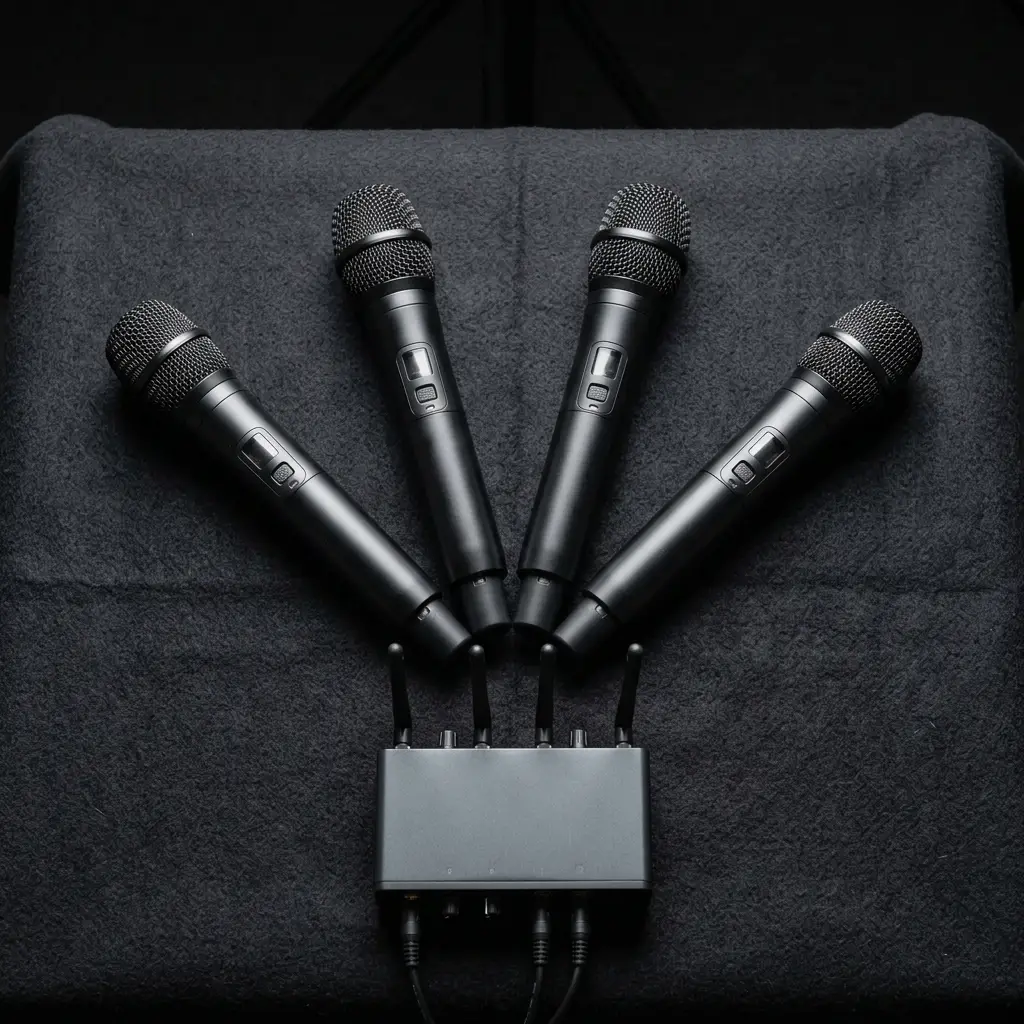
The 4-channel simultaneous operation is the UHF-5800’s key specification for KTV and group karaoke use. Each of the 4 wireless mics is assigned to its own dedicated UHF frequency — they don’t share a channel and can’t interfere with each other. In a KTV booth or bar with multiple people performing at once, this matters: 4 mics on 4 separate frequencies means no dropout, no cross-talk, and no signal competition between users.
UHF frequencies (typically in the 500–900MHz range) are preferable to 2.4GHz wireless systems in venue environments for 2 reasons. First, UHF avoids the congestion of the 2.4GHz band, which is shared by WiFi routers, Bluetooth devices, and other wireless equipment — in a venue with dozens of smartphones connected to the WiFi, a 2.4GHz mic system faces interference competition that a UHF system avoids entirely. Second, UHF frequencies penetrate walls and physical obstacles better at typical venue distances, maintaining more reliable signal across a room.
The UHF-5800 receiver connects to the DA-4000 Pro via 4 × 6.35mm output jacks — one per channel — plugging directly into the DA-4000 Pro’s 4 combo input jacks. No additional hardware is required to complete the wireless mic integration.
The receiver unit itself is compact enough to rack-mount or surface-mount near the DA-4000 Pro in the venue’s equipment cabinet. Each of the 4 channels has an independent volume control on the receiver, giving the host precise control over the mix between multiple active performers without adjusting the amplifier’s master output. In a KTV environment where different guests have different mic technique and vocal projection, per-channel mic volume control is a practical operational advantage. For full setup guidance on the microphone system and wiring, the karaoke machine microphone setup page covers the complete configuration process.
VocoPro UHF-5800: Advantages and Disadvantages
| ✅ Advantages | ❌ Disadvantages |
|---|---|
| 4 simultaneous wireless mics on separate UHF frequencies — no cross-channel interference | Priced at $200–$250 — a significant add-on cost on top of the DA-4000 Pro amplifier |
| 100-foot range — covers large venues and open performance areas reliably | UHF frequency coordination may require manual adjustment in areas with heavy UHF congestion |
| UHF band avoids 2.4GHz WiFi and Bluetooth congestion — more reliable in multi-device venues | Requires the DA-4000 Pro or compatible professional amplifier — not a standalone product |
| Per-channel volume control on the receiver — precise mix control between multiple performer | 4-channel system is more than needed for home or small 2-person karaoke sessions |
VocoPro Karaoke Machine vs Consumer Alternatives: Honest Comparison
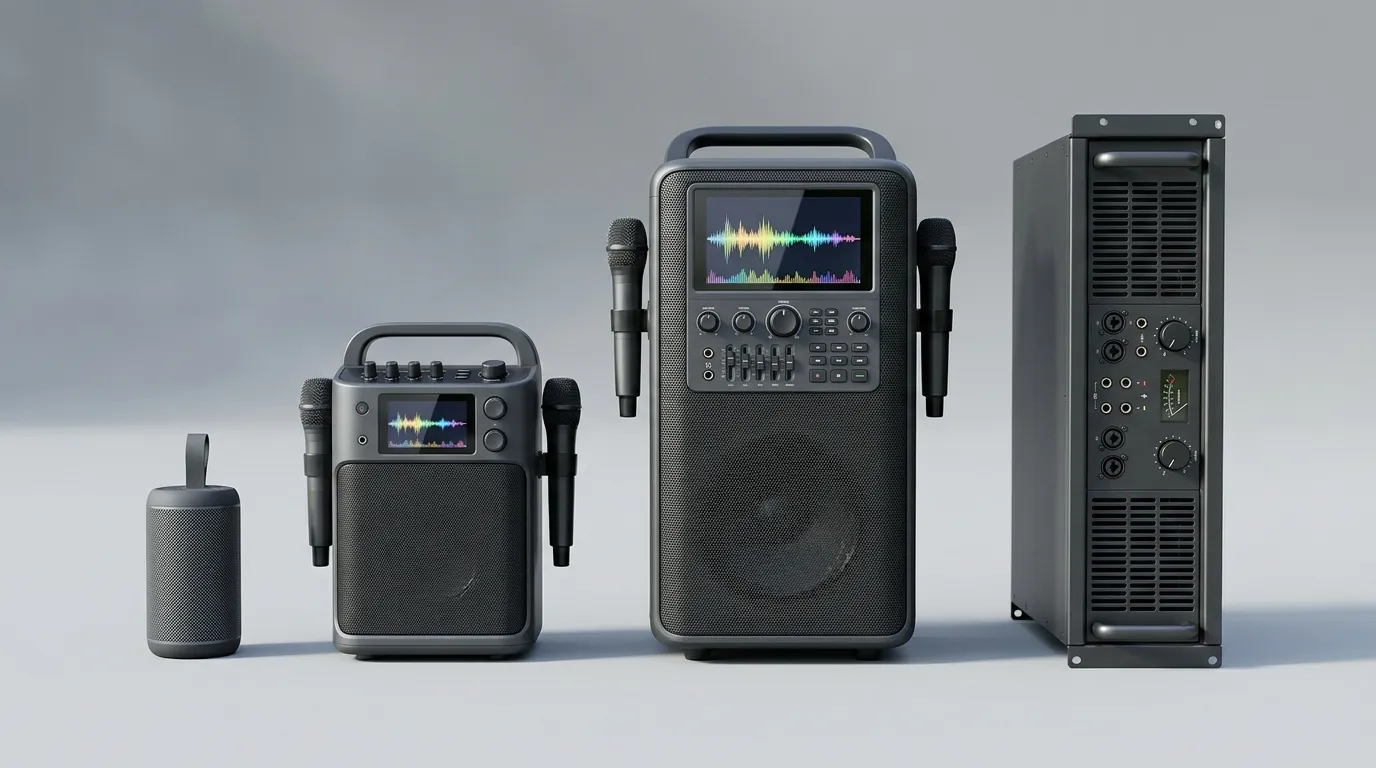
VocoPro’s DA-4000 Pro system is not a direct competitor to consumer all-in-one machines like the iKarao Shell S1, JYX PA9Plus, or Tonor K20 Wireless. It serves a different use case entirely — permanent venue and bar installation where component upgradeability, professional XLR connectivity, and sustained high-output performance matter.
| Attribute | VocoPro DA-4000 Pro System | iKarao Shell S1 | JYX PA9Plus | Tonor K20 Wireless |
|---|---|---|---|---|
| Total System Cost | $500–$880 (amp + 2 speakers) | $350–$400 (all-in-one) | $120–$160 (all-in-one) | $50–$70 (all-in-one) |
| Output | 200W pre-amp + PA speakers | 280W | 50W | ~30–40W |
| Mic Inputs | 4× XLR/combo (balanced) | 6.35mm TRS (wired) | 2× UHF wireless | 2× auto-pair wireless |
| Track Access | External source required | KaraFun 50K+ ($9/mo) | 10,000 built-in (free) | Bluetooth app only |
| Built-in Screen | None | 10.1-inch IPS Android | None | None |
| Setup Complexity | High — component system | Low — plug and play | Low — plug and play | Low — plug and play |
| Portability | None — rack-mount permanent | Low (mains only) | Low (mains only) | High (battery) |
| Best For | Permanent bar/venue | Home smart karaoke | Home offline value | Casual portable use |
The honest decision framework across these 4 options:
Choose VocoPro DA-4000 Pro for permanent bar or venue installation where professional XLR mic connectivity, 4-channel simultaneous wireless capability, and component upgradeability justify the $500–$880 minimum system investment. This is the only machine in this comparison built for sustained commercial use.
Choose iKarao karaoke machine — the Shell S1 at $350–$400 — for home smart karaoke with a 10.1-inch Android touchscreen and KaraFun Prime’s 50,000-track catalogue. The most feature-rich consumer all-in-one, at the highest consumer price point.
Choose JYX karaoke machine — the PA9Plus at $120–$160 — for home karaoke with the largest offline track library (10,000 built-in tracks, no subscription) at the lowest total cost of any machine in this comparison.
Choose Tonor K20 Wireless at $50–$70 for the lowest-cost bundled 2-mic portable karaoke system — the right choice for casual small-group use where portability and price are the primary constraints.
VocoPro’s total system cost of $500–$880 is 2–4× higher than consumer alternatives. That premium is only justified for sustained commercial or semi-professional use — a bar running karaoke 4 nights a week, a KTV venue with dedicated booth installations, or a home theatre with professional PA speakers already in place. For occasional home karaoke, the JBL karaoke machine and every consumer brand on this list deliver better value at lower total cost.
Frequently Asked Questions
What is the best VocoPro karaoke machine?
The VocoPro DA-4000 Pro is the brand’s flagship — a 200W professional karaoke amplifier with 4 XLR/6.35mm combo inputs, digital key control over ±6 semitones, and built-in echo and reverb at $200–$280. It requires 2 separate active PA speakers to form a complete system, making it suited to permanent bar or venue use, not home karaoke. For buyers needing only 2 mic inputs, the DA-2080 Pro delivers the same professional architecture at $150–$200.
Is VocoPro a professional karaoke brand?
Yes. VocoPro specialises in component karaoke amplifiers and mixers for bar and venue installation — a category distinct from consumer all-in-one machines. Every VocoPro product requires separate PA speakers and a separate audio source to form a complete system, delivering a higher total power ceiling and independent component upgradeability compared to any all-in-one unit. VocoPro serves bar owners, venue operators, and KTV lounge operators — not casual home karaoke buyers.
Does the VocoPro DA-4000 Pro include speakers?
No. The DA-4000 Pro is an amplifier only — it requires 2 separate active PA speakers (typically 12-inch or 15-inch) to form a complete sound system. Buyers should budget $150–$300 per active speaker in addition to the amplifier, bringing the minimum complete system cost to approximately $500–$880. This component approach is standard for professional venue installations, where each part of the system is selected and upgraded independently.
What microphones work with the VocoPro DA-4000 Pro?
The DA-4000 Pro accepts both XLR balanced microphones and 6.35mm TRS microphones via its 4 combo input jacks — no adapters required for either type. For wireless operation, the VocoPro UHF-5800 is the designed companion system, delivering 4 simultaneous wireless microphones on separate UHF frequencies with a 100-foot range. The UHF-5800 receiver connects directly to the DA-4000 Pro’s 4 combo inputs via 6.35mm outputs.
Is VocoPro good for home karaoke?
VocoPro’s component amplifiers suit permanent bar, venue, or dedicated semi-professional home theatre installations — not casual home karaoke. The DA-4000 Pro requires separate PA speakers, professional cabling, and more complex setup than any consumer all-in-one, at a total system cost of $500–$880. For typical home karaoke, the iKarao karaoke machine Shell S1 or JYX karaoke machine PA9Plus offer simpler setup at significantly lower total cost.
How many watts is the VocoPro DA-4000 Pro?
The DA-4000 Pro delivers 200W pre-amp output. This is the amplifier’s own rating — actual system volume depends on the connected PA speakers, which are purchased separately. A typical complete system pairing the DA-4000 Pro with 2 active 15-inch PA speakers (each rated 200–300W) produces output suitable for venues of 50–150 guests, with a typical SPL ceiling of 110–115dB at source under continuous performance conditions.
What is the VocoPro UHF-5800?
The VocoPro UHF-5800 is a 4-channel wireless microphone system delivering 4 simultaneous wireless mics, each on a separate UHF frequency, with 100-foot range, at $200–$250. It pairs with the DA-4000 Pro by connecting its 4 receiver outputs to the amplifier’s 4 combo input jacks. The UHF band avoids the 2.4GHz congestion from venue WiFi and Bluetooth devices, providing more reliable signal for group karaoke and KTV installations where multiple wireless devices operate simultaneously.
Is VocoPro better than an all-in-one karaoke machine?
It depends entirely on the use case. VocoPro’s component systems deliver higher total power, professional XLR connectivity, independent component upgradeability, and durability for sustained commercial use — better for permanent bar and venue installation. Consumer all-in-one machines — iKarao Shell S1 ($350–$400), JYX PA9Plus ($120–$160), Tonor K20 Wireless ($50–$70) — offer simpler setup, portability, and lower total cost, all better for home or casual use. VocoPro serves a completely different buyer, not a superior version of the same product.