Best Home Karaoke Machine 2026: Top Picks for Every Room Size and Budget
For most living rooms, prioritize TV connectivity, two microphones, and enough continuous output for the room before paying extra for a built-in screen. A home karaoke machine should integrate easily with your existing display and audio equipment. semi-permanent indoor use, combining speaker output matched to room size, TV connectivity, and a track access method that works without a phone in hand.
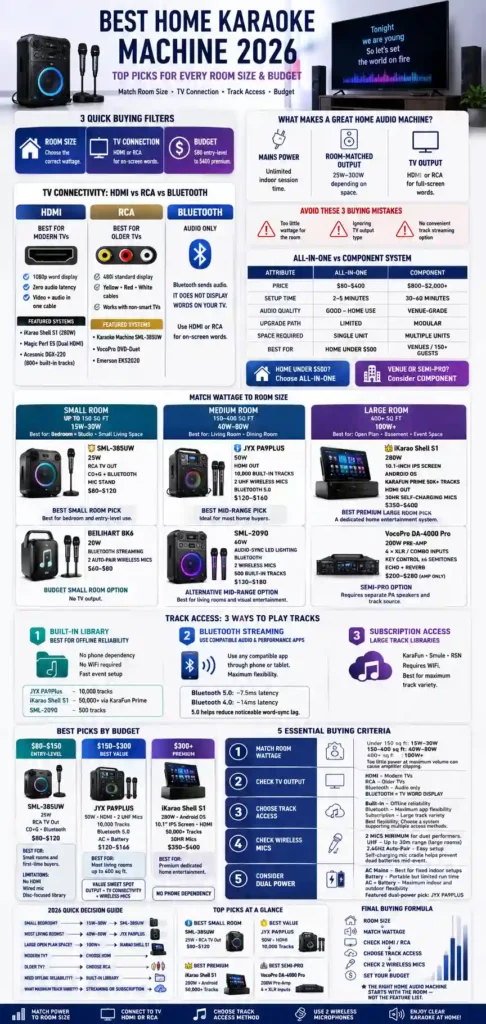
The 3 selection filters for any home buyer are room size (watts required), TV connectivity type (HDMI or RCA), and budget tier ($80–$400+). For a broader comparison of all karaoke machine categories, see the complete best karaoke machine overall guide, or browse all karaoke machine reviews.
Table of Contents
- What Makes the Best Home Karaoke Machine
- TV Connectivity: HDMI vs RCA vs Bluetooth
- All-in-One Home Karaoke Machine vs Component System
- Best Home Karaoke Machines by Room Size
- Track Library Access: Built-In vs Streaming vs Disc
- Best Home Karaoke Machines by Budget
- What to Look For in a Home Karaoke Machine: 5 Criteria
- Frequently Asked Questions
Best Home Karaoke Machine 2026: What Makes the Best Home Karaoke Machine
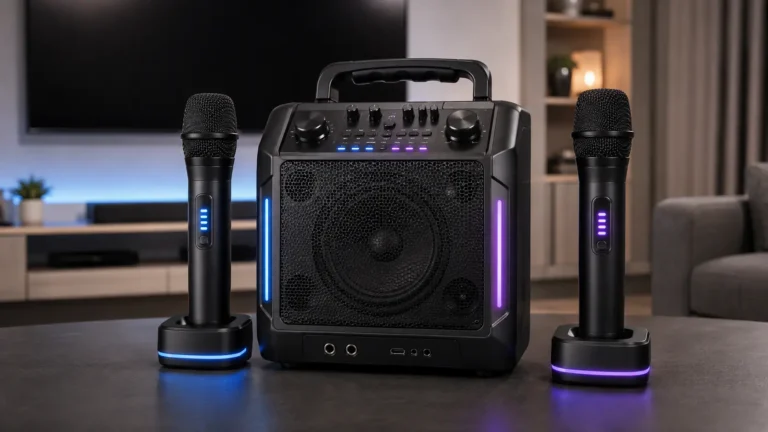
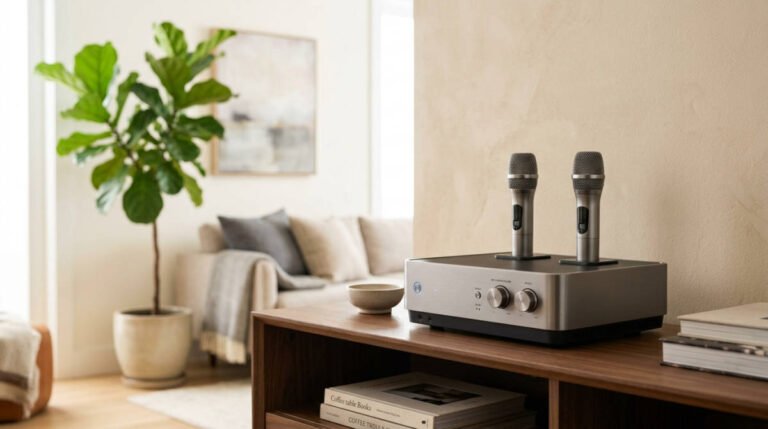
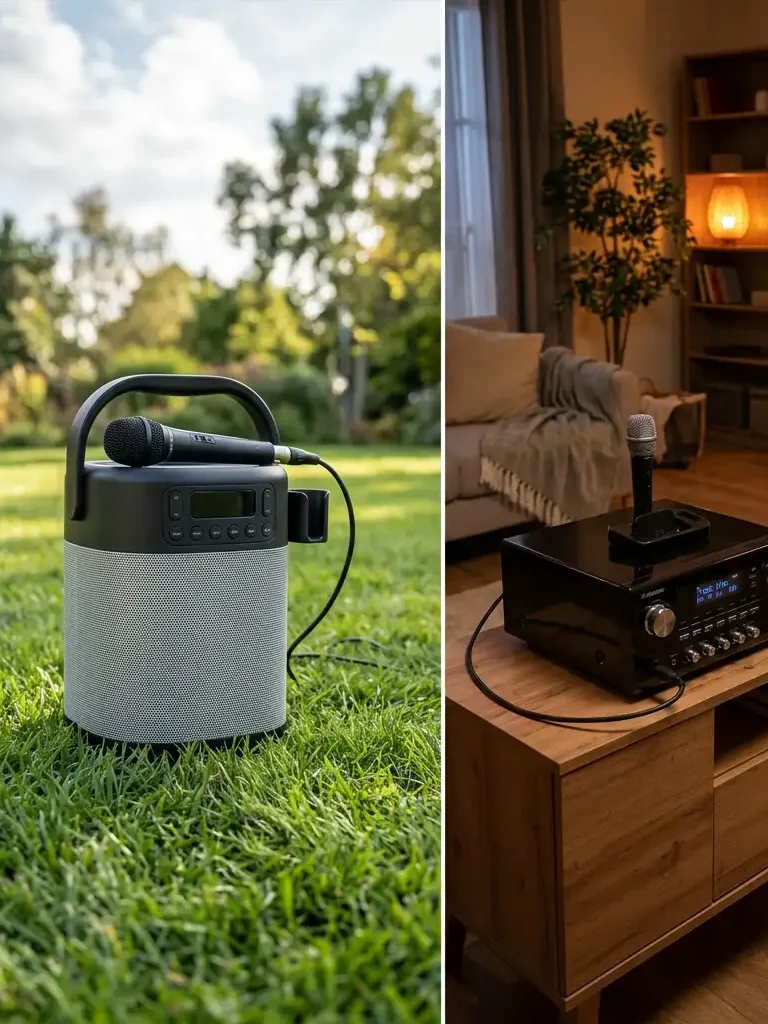
A home karaoke machine differs from a portable karaoke machine in 3 core attributes: mains-powered operation for unlimited session length, room-matched speaker output (25W–300W), and TV output via HDMI or RCA for full-screen word display. The 3 attributes most home buyers get wrong are underestimating room wattage needs, ignoring TV output type, and choosing a machine without track streaming capability. A portable machine runs on battery power and is optimised for outdoor mobility a home machine is optimised for indoor audio quality and TV integration.
TV Connectivity: HDMI vs RCA vs Bluetooth What You Actually Need
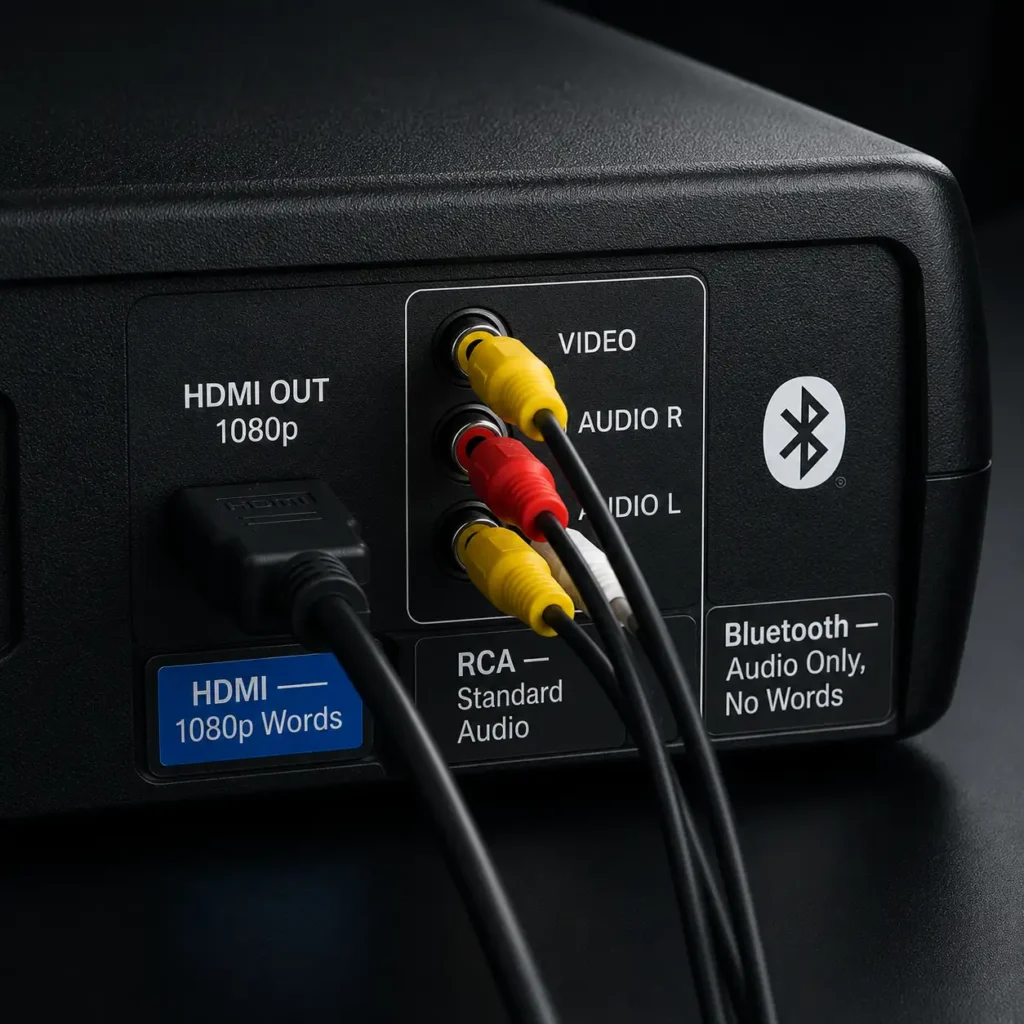
TV connectivity is the most important technical spec for a home karaoke machine it determines whether words display on your TV screen or only on a small built-in panel. The critical distinction: Bluetooth to TV transmits audio only and does NOT display words on screen. HDMI or RCA output is required for on-screen word display. For full setup instructions, see how to connect a karaoke machine to a TV. For machines specifically built for screen display, see the best karaoke machine with screen guide.
HDMI Output
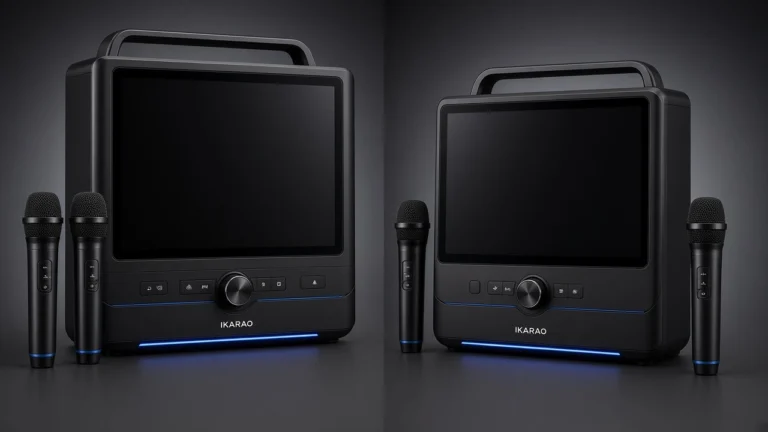
HDMI delivers 1080p words display, zero audio latency, and supports 5.1 surround pass-through on supported machines the correct output type for any modern TV (2012 onwards). A single cable carries both video and audio. The 3 home karaoke machines with HDMI output are the iKarao Shell S1 (280W Peak, Android, 10.1-inch screen), Magic Perf E5 (dedicated Android karaoke system, dual HDMI), and Acesonic DGX-220 (150W, HDMI, 800+ built-in Tracks).
RCA Composite Output
RCA composite output works on all TVs including non-smart models delivering standard-definition word at 480i via yellow (video), red, and white (audio) cables. RCA is the most common output type on machines under $200 and is the correct connection for televisions without HDMI ports. The 3 home karaoke machines with RCA output are the karaoke Machine SML-385UW ($80–$120), VocoPro DVD-Duet, and Emerson EKS2020.
All-in-One Home Karaoke Machine vs Component System
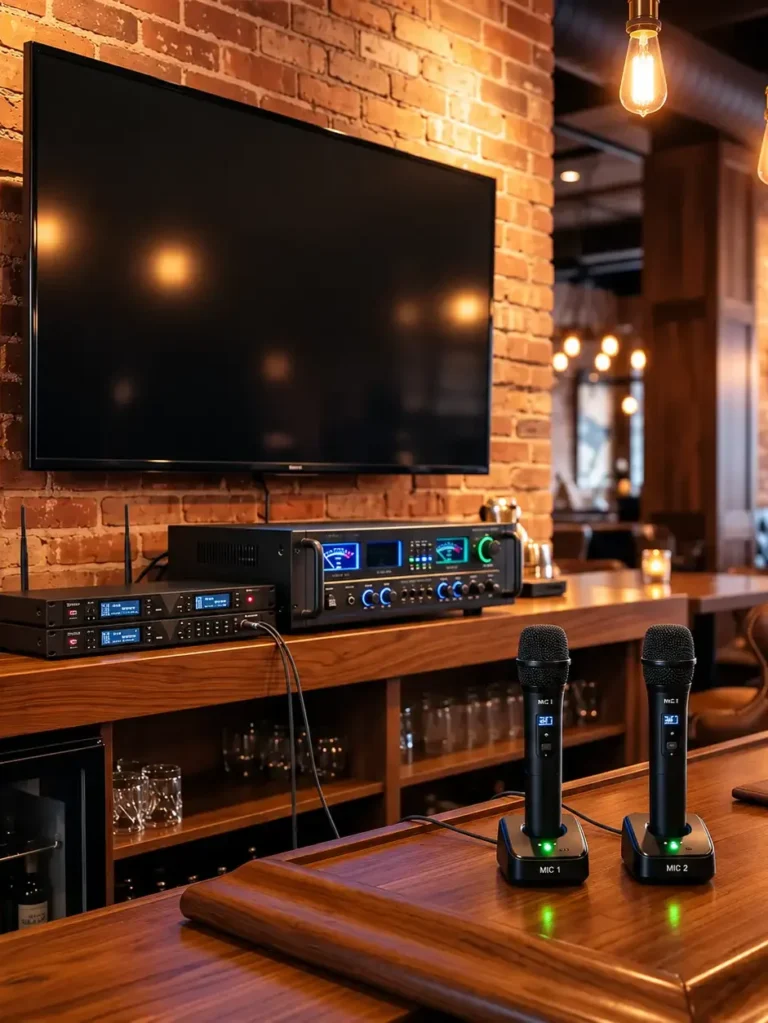
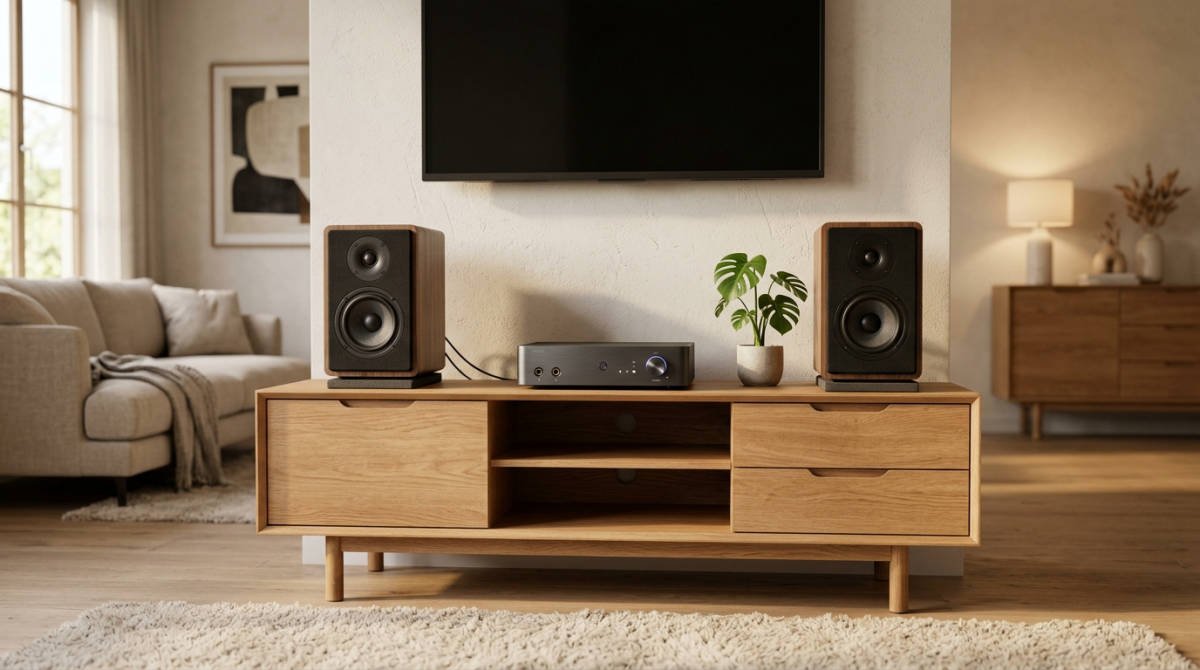
An all-in-one home karaoke machine combines speaker, amplifier, and track playback in a single unit a component system separates these into a dedicated karaoke amplifier, PA speakers, and track source. For home use below $500, all-in-one is the correct choice component systems justify their cost above $800 in venue or semi-professional applications.
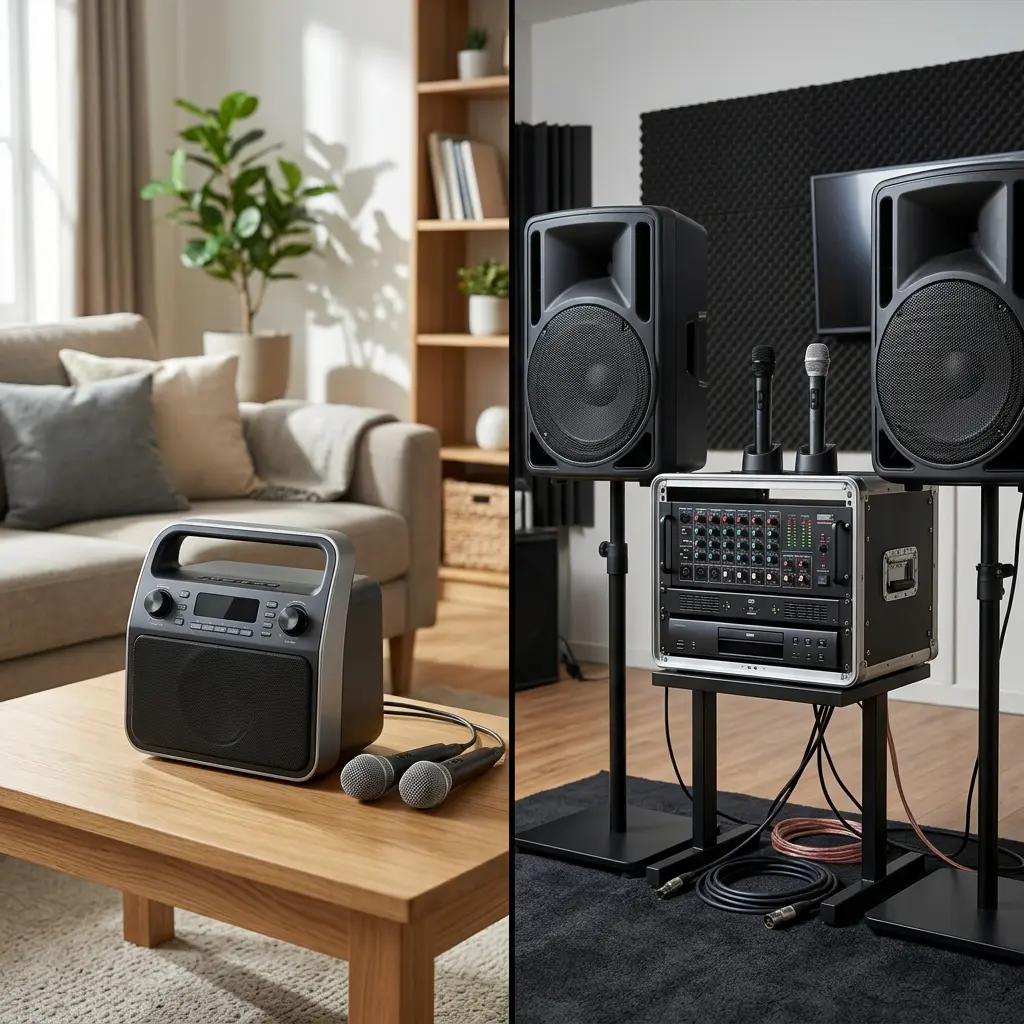
| Attribute | All-in-One | Component System |
|---|---|---|
| Price | $80–$400 complete | $800–$2,000+ (amp + speakers + source) |
| Setup Time | 2–5 minutes | 30–60 minutes (wiring + configuration) |
| Audio Quality | Good – suitable for home use | Venue-grade higher headroom |
| Upgrade Path | Limited replace full unit | Modular upgrade components individually |
| Space Required | Single unit footprint | Multiple units + cabling + speaker stands |
| Best For | Home use under $500 | Venues, semi-pro, 150+ guests |
Best Home Karaoke Machines by Room Size
Room size determines the minimum wattage needed for karaoke to sound clear without distortion undersized output at high volume produces amplifier clipping, the single most common source of poor karaoke audio at home. Matching wattage to room size prevents clipping and protects the amplifier from thermal damage during extended sessions.
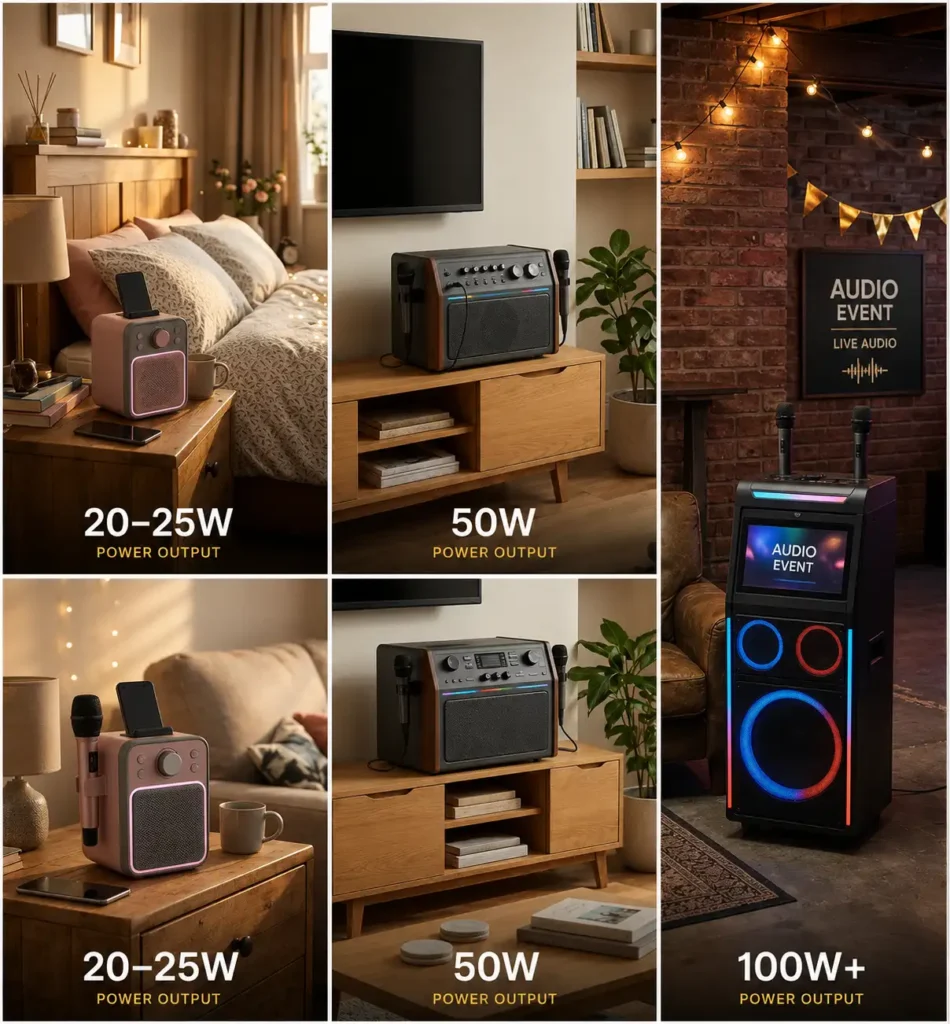
Small Rooms (Bedroom / Studio, up to 150 sq ft) 15W–30W
At under 150 sq ft with reflective walls, 20W produces 82–85dB at 3 feet sufficient for solo or duet performer. 15–30W is the correct output range for bedrooms, studios, and small living spaces.
Karaoke Machine SML-385UW Best Small Room Pick
25W output, CD+G + Bluetooth, adjustable mic stand, RCA TV out, wired mic included. Covers living rooms up to 200 sq ft. Limitation: no HDMI output.
Best for: Bedroom / small room entry-level use.
BEILIHART BK6 Budget Small Room Option
20W, Bluetooth streaming, 2 auto-pairing wireless microphones included. No TV output. Lowest-cost entry point for bedroom or studio use with wireless mic convenience.
Best for: Bedroom / small space with minimal budget.
Medium Rooms (Living Room / Dining Room, 150–400 sq ft) 40W–80W
A 50W machine in a 250 sq ft living room with carpeted floors and soft furnishings peaks at approximately 88dB at the listening position the standard event volume threshold. 40–80W covers the majority of UK and US living rooms and dining spaces.
JYX PA9Plus Best Mid-Range Living Room Pick
50W, HDMI output, 10,000 built-in tracks, 2 wireless UHF mics, Bluetooth 5.0, dual AC + battery power. The best-value home karaoke machine for most living rooms. Dual-power allows indoor mains use and outdoor battery use without changing machines.
Best for: Living room best mid-range pick for most home buyers.
Singing Machine SML-2090 Alternative Mid-Range Option
60W, audio -sync LED lighting, Bluetooth streaming, 2 wireless mics, 500 built-in tracks. Covers living rooms up to 300 sq ft at full volume.
Best for: Living room / events visual entertainment focus.
Large Rooms (Open Plan / Basement / Event Space, 400+ sq ft) 100W+
In a 500 sq ft open-plan space, 100W at 50% volume produces approximately 90dB at 10 feet the practical minimum for a group of 8–12 people. Large rooms and open-plan layouts require 100W+ to maintain word intelligibility and vocal presence over ambient event noise.
iKarao Shell S1 Best Large Room Premium Pick
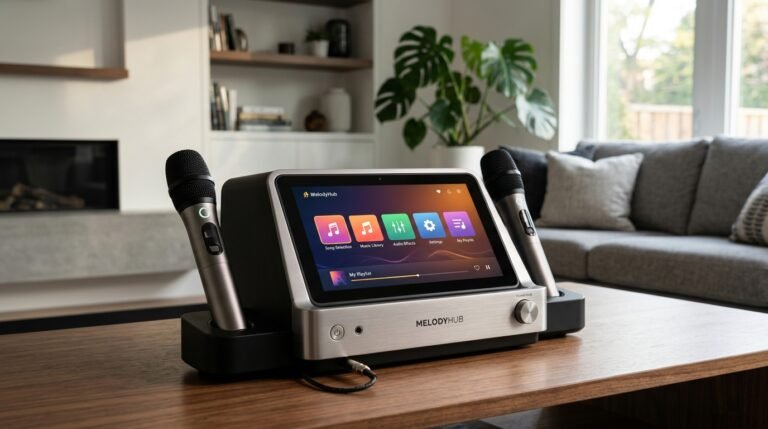
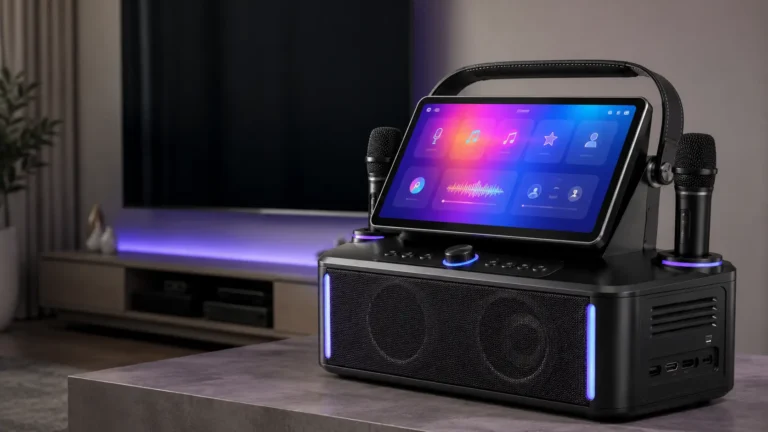
280W Peak, 10.1-inch IPS screen, Android OS, KaraFun Prime (50,000+ tracks via WiFi), self-charging wireless mics (30hr), HDMI TV output. The correct choice for buyers who want a dedicated home entertainment system, not a portable speaker with a mic input.
Best for: Large open-plan / basement / premium home entertainment.
VocoPro DA-4808-BT Semi-Pro Option for Large Rooms
250W max powered mixing amplifier, Bluetooth and optical TV connectivity, key control, echo and delay effects. Requires separate passive speakers (paired with standard speaker cables). Best for home buyers building a component system with passive speakers.
Best for: Large room component setups requiring passive speakers.
Track Library Access: Built-In vs Streaming vs Disc
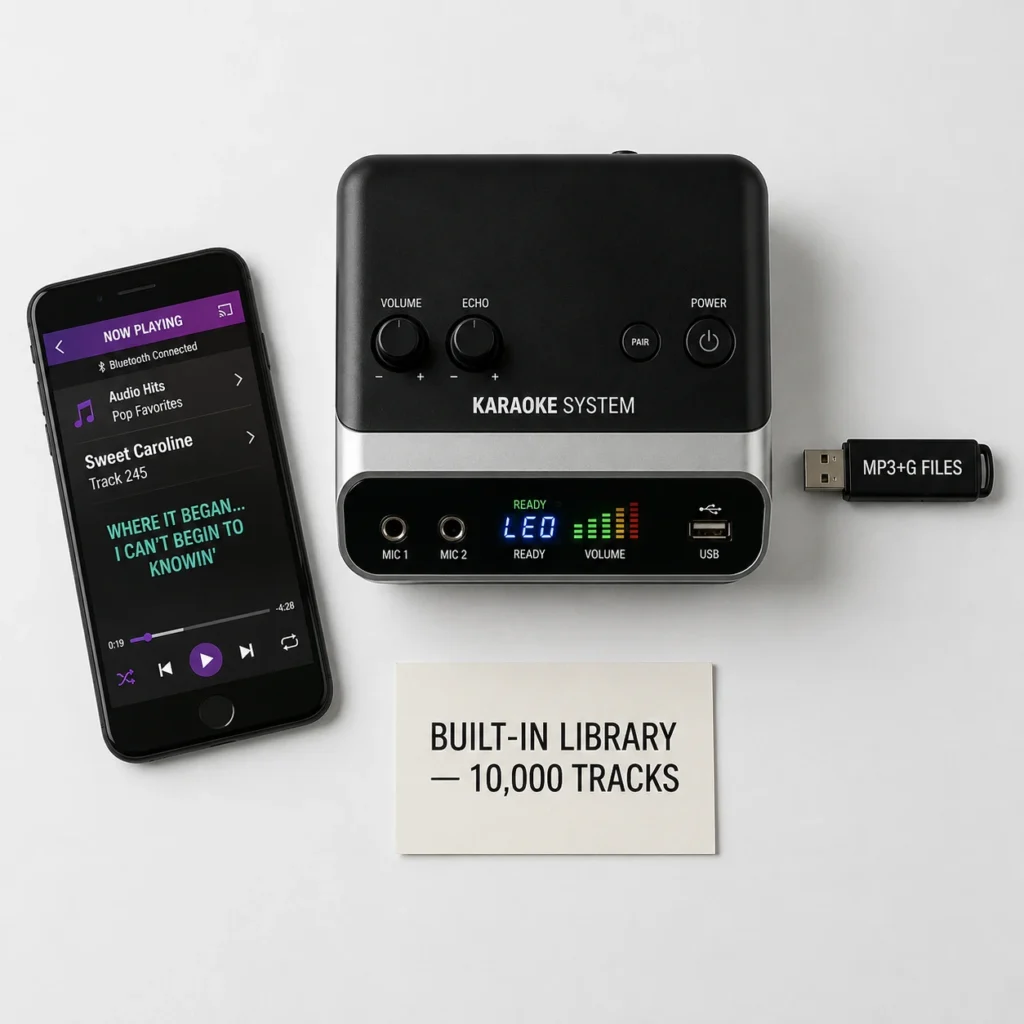
Home karaoke machines access tracks through 3 methods: built-in track libraries (100–50,000 tracks, work offline), Bluetooth streaming from phone or tablet (any app, requires device), and subscription services (KaraFun, Smule, RSN require WiFi). Each method has a different dependency profile that affects reliability at events.
Built-In Library (Offline)
Built-in libraries are the most reliable option for events no phone dependency, no WiFi requirement, no app friction. The 3 machines with the largest built-in libraries are the JYX PA9Plus (10,000 tracks), iKarao Shell S1 (KaraFun Prime 50,000+ via WiFi), and Karaoke Machine SML-2090 (500 tracks). For events with guests unfamiliar with karaoke apps, a built-in library eliminates setup friction and host dependency.
Bluetooth Streaming
Bluetooth streaming allows any karaoke app (KaraFun, YouTube karaoke channels, Smule) to play through the machine via a phone or tablet. This requires a charged host device maintained throughout the event. Latency threshold: Bluetooth 5.0 at 7.5ms is imperceptible; Bluetooth 4.0 at 14ms introduces a perceptible word sync lag at distances above 5m. Machines with Bluetooth 5.0 include the JYX PA9Plus and Karaoke Machine SML-2090.
Best Home Karaoke Machines by Budget
The 3 home karaoke budget tiers are $80–$150 (entry-level, suitable for small rooms and casual use), $150–$300 (mid-range, best value for most home buyers), and $300+ (premium, smart OS, 100W+ output, subscription track libraries).
Across independent buyer reviews, the JYX PA9Plus and iKarao Shell S1 consistently rank among the best rated home karaoke machines and top rated home karaoke machines, offering strong performance at different price points.
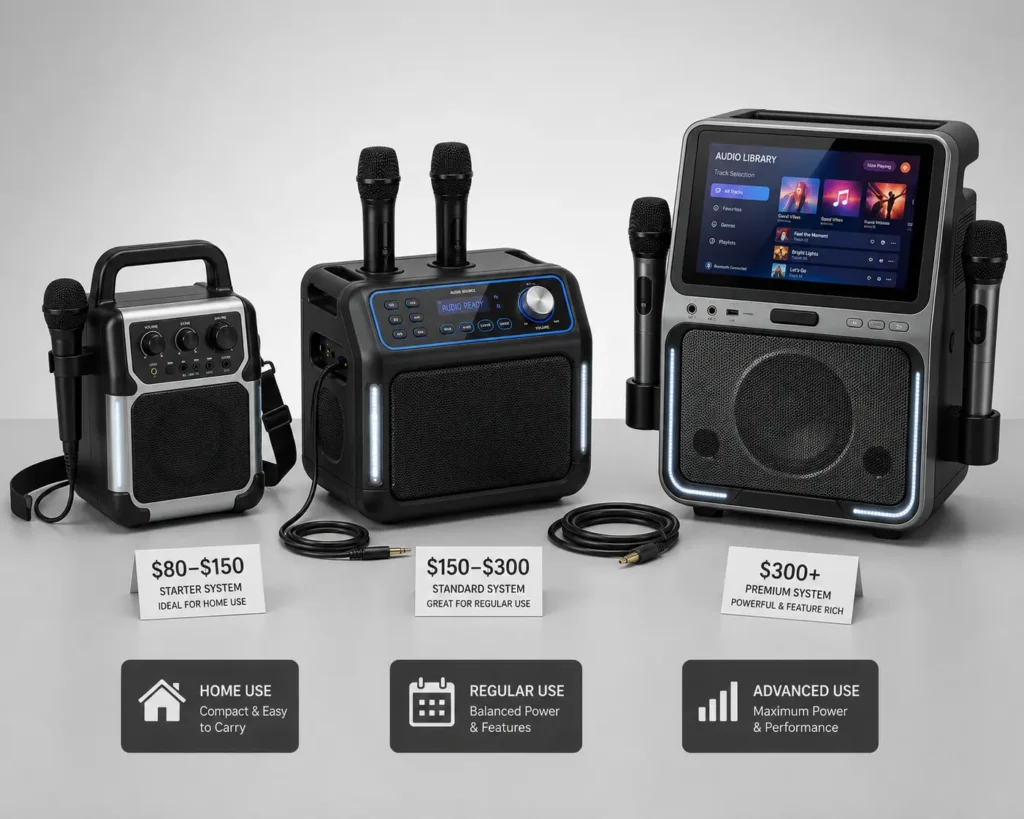
$80–$150: Entry-Level Home Karaoke
Best pick: Karaoke Machine SML-385UW ($80–$120). 25W output, CD+G + Bluetooth, adjustable mic stand, RCA TV output, wired microphone included. Covers living rooms up to 200 sq ft. Limitation: no HDMI output, no wireless mics, no built-in streaming library beyond CD+G discs. The correct entry-level choice for buyers testing home karaoke before committing to a higher budget.
This entry-level tier is also the right starting point for anyone searching for the best affordable karaoke machine or the best inexpensive karaoke machine, since it delivers the essential features most home users need Bluetooth connectivity, TV output, and reliable sound quality without paying extra for advanced smart features.
$150–$300: Mid-Range Home Karaoke (Best Value)
Best pick: JYX PA9Plus ($120–$160). 50W, HDMI output, 2 wireless UHF mics, 10,000 built-in tracks, Bluetooth 5.0, dual AC + battery power. For most home buyers, the $150–$300 tier delivers the best balance of output, TV connectivity, and wireless mic performance. The JYX PA9Plus is the standout value machine in this tier it covers living rooms up to 400 sq ft and connects directly to a TV via HDMI for full-screen words.
$300+: Premium Home Karaoke
Best pick: iKarao Shell S1 ($350–$400). 280W Peak, 10.1-inch IPS screen, Android OS, KaraFun Prime (50,000+ tracks), self-charging wireless mics (30hr battery), HDMI output. The Shell S1 is the correct choice for buyers who want a dedicated home entertainment system not a portable speaker with a mic input. Smart Android OS means no phone dependency; KaraFun Prime provides access to 50,000+ licensed tracks without disc management.
What to Look For in a Home Karaoke Machine: 5 Buying Criteria
The 5 most important criteria when choosing a home karaoke machine are room wattage match, TV output type, track access method, wireless mic system, and dual-power capability.
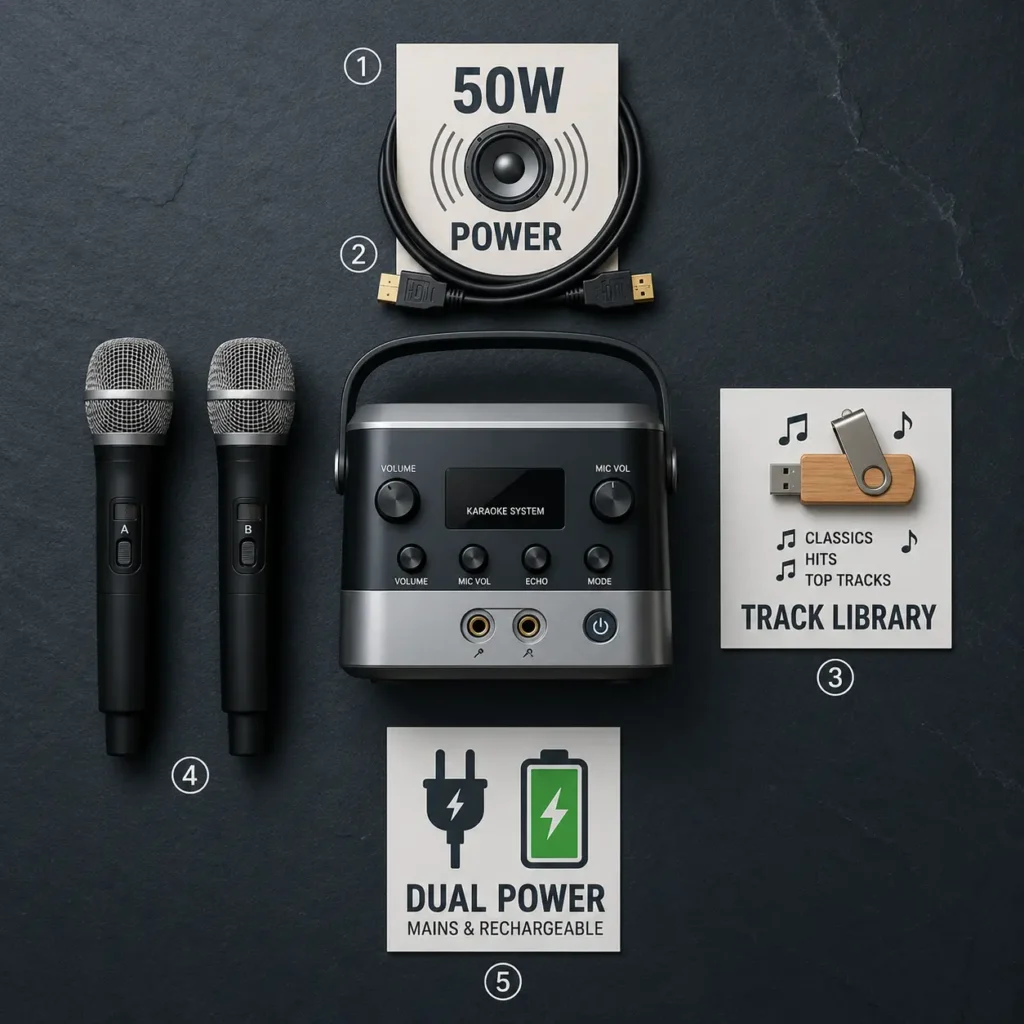
1. Room Wattage Match
15–30W for rooms under 150 sq ft. 40–80W for rooms of 150–400 sq ft. 100W+ for rooms above 400 sq ft. Buying under-spec and running at maximum volume produces amplifier clipping distortion the most common home karaoke audio problem. Always match wattage to room size before comparing other features.
2. TV Output Type
HDMI for modern TVs (2012 onwards). RCA for older TVs without HDMI ports. Bluetooth for audio only Bluetooth does not display words on screen. Confirm the TV output type of any machine before purchasing. The majority of machines under $100 use RCA only; machines above $150 increasingly offer HDMI.
3. Track Access Method
Built-in library for offline reliability at events with no phone dependency. Bluetooth streaming for access to any karaoke app with maximum flexibility. Subscription service (KaraFun at $9/month, Smule free tier) for 50,000+ track variety with WiFi access. Machines with all 3 methods offer maximum flexibility the JYX PA9Plus and iKarao Shell S1 support all 3.
4. Wireless Mic System
2 wireless microphones minimum for duet performer. UHF systems (30m range) are better for large rooms; 2.4GHz auto-pair systems offer simpler setup for smaller spaces. Confirm mic battery life for extended sessions the iKarao Shell S1 includes self-charging mics with 30hr battery (recharge while in the cradle), avoiding the common problem of dead mic batteries mid-event.
5. Dual-Power Capability
Dual-power machines (AC mains + rechargeable battery) allow indoor and outdoor use without changing machines. The JYX PA9Plus is the primary dual-power machine in this buying guide it operates on AC mains indoors and switches to battery for outdoor use. Mains-only machines suit fixed indoor setups. Battery-only machines limit session length to the battery’s run time.
Frequently Asked Questions
What is the best home karaoke machine?
The JYX PA9Plus is the best home karaoke machine for most buyers it delivers 50W output, HDMI TV connectivity, 2 wireless auto-pairing mics, 10,000 built-in tracks, and dual AC/battery power at $120–$160. For larger rooms above 400 sq ft or buyers wanting a smart Android system, the iKarao Shell S1 at $350–$400 delivers 280W Peak output and KaraFun Prime access to 50,000+ licensed tracks.
How many watts do I need for a home karaoke machine?
15–30W covers small rooms up to 150 sq ft. 40–80W covers medium living rooms of 150–400 sq ft. 100W+ is required for large open-plan spaces or basement event rooms above 400 sq ft. Running a machine under its room wattage requirement at maximum volume produces amplifier clipping the most common cause of distorted karaoke audio in home settings.
Can a home karaoke machine connect to a TV?
Yes most home karaoke machines connect to a TV via HDMI output (modern TVs, 1080p words display), RCA composite output (older TVs, standard definition), or Bluetooth audio. Note that Bluetooth transmits audio only it does not display words on screen. HDMI or RCA output is required for on-screen word display. For full setup instructions, see the guide on how to connect a karaoke machine to a TV.
What is the difference between a karaoke machine and a karaoke system?
A karaoke machine is an all-in-one unit combining speaker, amplifier, and track playback in a single enclosure. A karaoke system separates these components: a dedicated karaoke amplifier or mixer, separate PA speakers, and an independent track source. For home use below $500, all-in-one machines deliver better value. Component systems justify their cost above $800 for semi-professional or venue applications.
What home karaoke machine works best with Spotify?
No karaoke machine works directly with Spotify Spotify does not provide instrumental (vocals-removed) tracks and does not support karaoke app integration. The correct workflow for streaming karaoke at home is Bluetooth connection to a dedicated karaoke app: KaraFun ($9/month, 50,000+ tracks), Smule (free with in-app purchases), or YouTube karaoke channels. The iKarao Shell S1 runs these apps natively via Android OS without a separate phone.
How much should I spend on a home karaoke machine?
$150–$300 is the best value range for most home buyers machines in this tier deliver 40–60W output, HDMI or RCA TV connectivity, 2 wireless microphones, and Bluetooth streaming. Under $150 provides adequate performance for small rooms but typically lacks HDMI output or wireless mics. Above $300, the iKarao Shell S1 adds smart Android OS, 280W Peak output, and a built-in subscription library that eliminates app dependency.
Do home karaoke machines need WiFi?
No most home karaoke machines operate without WiFi using Bluetooth streaming from a phone or a built-in tracks library. WiFi is only required for smart machines like the iKarao Shell S1, which runs Android apps (KaraFun, YouTube) directly on the device. For offline reliability at events, machines with a built-in library JYX PA9Plus (10,000 tracks), Karaoke Machine SML-2090 (500 tracks) work without any network connection.
What is the best all-in-one home karaoke system?
The iKarao Shell S1 is the best all-in-one home karaoke system it combines a 10.1-inch IPS touchscreen, 280W output, Android OS with KaraFun Prime (50,000+ tracks), self-charging wireless mics (30hr battery), and HDMI TV output in a single unit at $350–$400. For buyers with a $150–$200 budget, the JYX PA9Plus delivers the best all-in-one performance at that tier.